
How does radon get into water?
Radon is a radioactive gas. It occurs naturally and is produced by the breakdown of uranium in soil, rock, and water. It can also dissolve into our water supply. Drinking water that has high levels of radon may be a health risk, but breathing air high in radon concentration is more harmful to your health. Breathing in radon gas over a long period of time can increase your risk of getting lung cancer. Drinking water contaminated by radon may increase your chances of developing stomach cancer.
The New Jersey Drinking Water Quality Institute submitted a recommendation to the state of New Jersey for a maximum contaminant level (MCL) for Radon in Water of 800 pCi/L (Picocuries per Liter). Although an action level does not currently exist for private wells in New Jersey, past considerations included MCL’s ranging from 300-4000 pCi/L.
Due to pressure differentials, radon gas typically rises from where it is trapped at high pressure under a home, into the lowest level of the home. But radon gas can also enter the home through well water. As you shower or use your well water for other household tasks (ex: laundry or dishwashing), the gas can be released from the water into the air. On average, every 10,000 Picocuries per Liter (pCi/L) of radon in water contributes 1 additional pCi/L of radon in the air. (The action level for radon in air is 4.0 pCi/L). However, a 10 minute shower (with radon in water levels of 10,000 Picocuries per Liter) can raise the radon in air levels in a bathroom to 30 pCi/L, more than 7 times the action level!
Do I have radon in my water?
If you suspect a problem and your drinking water comes from a private well, you should have the well tested. If Radon or any other contaminant is found RAdata can install Water Treatment systems to treat any water problem.
Test my water for radon
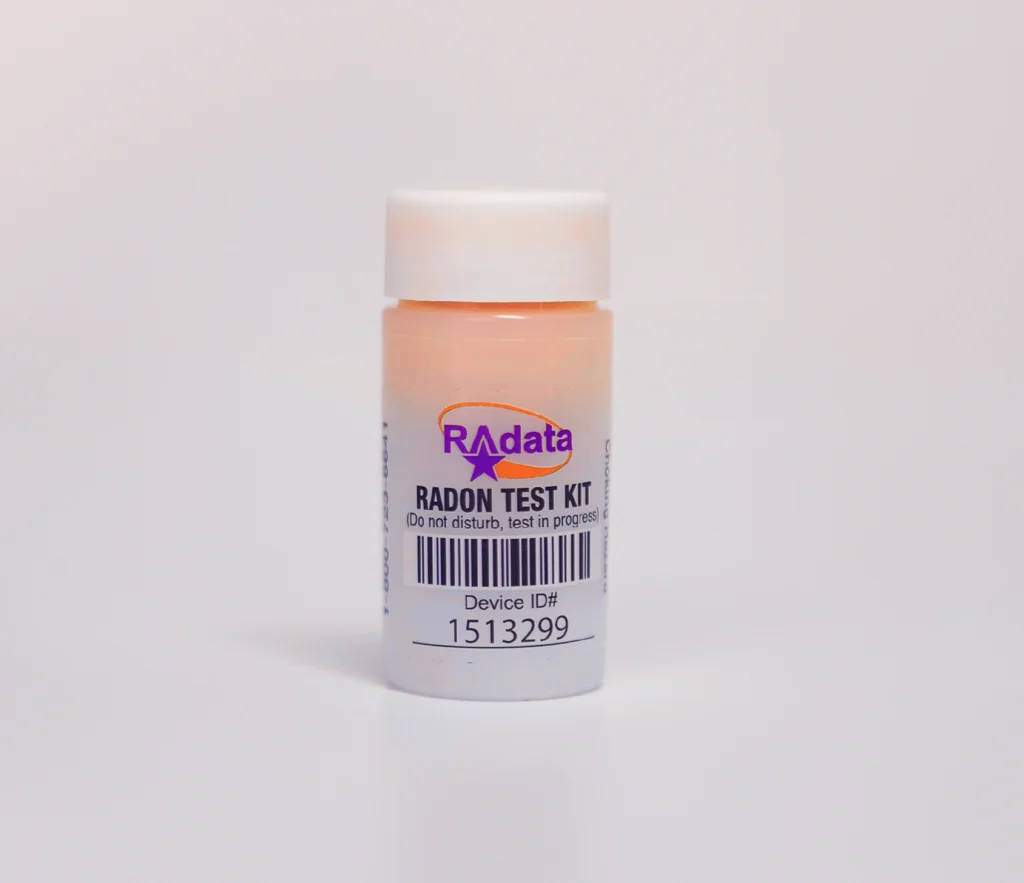
RAdata provides a full water testing service, click to learn about our Water Testing Service or get started immediately by ordering well water testing for your home.
Treatment: Aeration system
adon in water is treated in one of two ways: A Granular Activated Carbon (GAC) system or an Aeration system. The type of treatment that is needed is dictated by the concentration of the radon in water.
If the radon in water levels are 4,000 pCi/L or lower, GAC is a practical option. GAC treatment generally costs less than Aeration, but the carbon tanks require periodic replacement when they have been saturated with radiation and can present eventual disposal issues. The radon in water reduction associated to GAC filtration is typically a 50-80% reduction.
If the radon in water levels are above 4,000 pCi/L, an Aeration system is needed. The radon in water reduction associated to Aeration is very high, typically a 98-99% reduction. As the water is aerated, radon is bubbled up and is vented to the outside of the house above the roofline. The clean water overflows the brim of the cup, and a built-in pump automatically delivers radon free water to your home.
It is important to have annual service on either type of equipment to ensure proper function (and to monitor the saturation of GAC tanks). A radon in water sample should also be collected before and after the treatment system each year at the time of service.